By Yaldaz Sadakova
I didn’t plan to vanish without warning. It just happened that way.
I mean, I didn’t physically vanish. I simply withdrew from social media. I stopped checking Facebook and posting there. A few months later, I deleted my X account.
This digital retreat almost amounts to physical disappearance. It almost has the same finality, given that social media is where things are made official, where things are more real than in real life.
Defying Ableist Expectaitons
I left because I had no time or mental bandwidth for scrolling and posting.
My days had become unwieldy to-do lists. Rushing to work in the morning. Rushing back home in the evening. Doing yoga. Cooking dinner. Writing. Meditating. Tending to various health issues. Juggling medical appointments. Trying to squeeze the most out of every overscheduled minute.
So I did what I always do when things become overwhelming. I went into hermit mode. It’s the only mode which replenishes my physical and mental energy. I gave myself permission to pull the plug because I’m not a machine. Nor am I a corporation with employees paid to post regularly on social media.
We need to make it acceptable for independent creators to take breaks from producing content. Maybe they’re going through a chronic illness flare-up. Maybe they’re raising a child. Maybe they had to get a job to support themselves—because the illusion that you can make a living solely from Patreon and YouTube has been shattered, except for a few outliers.
Expecting indie creators to act like well-resourced companies at all times is not only unrealistic, but also ableist and classist.
If withdrawing to care for ourselves means that we lose followers, then so be it. We shouldn’t have to choose between meeting our basic needs and maintaining an audience.
Losing My Mind
I left social media because I was losing my mind. I couldn’t focus on my writing anymore.
I would diligently block out time to work on my new novel every evening after dinner. Forty minutes to an hour—that’s all I could spare. I’d write two sentences from a scene, after which I’d go on X. I’d type a couple more sentences and check my email. A few more sentences, followed by Instagram, followed by another sentence, followed by X. And on and on.
The entire writing session would be a frantic toggle between tabs, a string of fractured moments. It felt like being at my day job in the office, where I’m bombarded by messages as I try to focus, except that during my writing sessions at home, nobody was interrupting me. Nobody was making me check the social media sites. Their addictive mechanisms had trained my brain so well that I felt the urge to visit them even in the absence of notifications.
It was after one too many writing sessions like this—squandered sessions which always made me feel like a failure—that I deleted my X account. I also logged out of Instagram, so I couldn’t just visit the site whenever I felt stuck on a scene or whenever my mind craved a distraction.
Angry Posts Don’t Work
I left social media because my rants about injustice weren’t making any difference.
Much of my Facebook activity over the years had been comprised of posts about the cruelty, Islamophobia and racism behind the EU’s migration policies. Posts about how countless migrants die preventable deaths in the Mediterranean because there are no legal ways for them to reach Europe. How the EU’s migration rules are deliberately designed to deter and kill. How the lack of legal migration avenues creates financial incentives for smugglers, so the EU’s claim that Fortress Europe can stop smugglers is 100 percent bogus.
When we vent about things like that, we do it first and foremost because we want a reprieve from the rage we feel. I see this injustice, the wrongness of it burns inside of me, I don’t understand how the rest of the world isn’t outraged by it, so the most immediate form of relief is to post about it because I can.
But I had to accept at some point that these angry posts weren’t helping. Those issues I and many others were raging about remained unresolved. To this day, nothing has changed.
This is true not only in the field of migration. Look at other systemic issues, especially our biggest existential threat—climate change. Social media righteousness hasn’t made much of a dent.
The question to ask is, when we’re busy shouting online and competing in the Oppression Olympics against each other, what are we not doing?
We’re not building global alliances around our intersecting liberal causes. We’re not organizing movements on the ground.
We’re not lobbying institutions for humane migration policies which allow all people to move freely and in dignity. We’re not lobbying for bold environmental legislation which bans fossil fuels now. We’re not working to dismantle the current economic order—because Big Oil, Big Ag and the rest of the corporate world will always obstruct the radical legislation we need to save the planet.
Building coalitions and movements offline is daunting unglamorous work which requires us to think of the greater good and to view ourselves as just one part of the planetary ecosystem and the social collective. It requires our minds to zoom out and see the big picture, to think about political systems and ideologies. It also requires us to learn revolutionary lessons from history.
This is at complete odds with the immediacy and individualism that social media has instilled in us, making us view ourselves as nothing more than brands that must vie for clicks around the clock.
The Road to Cloud Serfdom
While angry posts don’t spark social change, they make the tech bros rich.
When I spend time on Elon’s and Zuck’s platforms, that brings money into their pockets. If I’m creating content, that’s free labor for them—the free content they need to attract advertising dollars. Even if I’m just lurking and mindlessly scrolling, that boosts their bottom line because I’m providing the commodity their advertisers need, attention. In other words, I’m acting as a cloud serf.
Cloud serf is a term invented by Yanis Varoufakis, economist, writer and former finance minister of Greece. He argues that capitalism has actually died and it has been replaced by a new, more exploitative order called technofeudalism.
“Under technofeudalism, we no longer own our minds,” Varoufakis writes in his book Technofeudalism: What Killed Capitalism, which is one of the most eye-opening things I’ve read. In the new system, dominated by Big Tech, we are now “cloud serfs, glued to our smartphones and tablets, eagerly producing the cloud capital that keeps our new overlords on cloud nine,” Varoufakis notes.
“Sure enough, most of us choose to do this, enjoy it even. Broadcasting our opinions and sharing our lives’ intimate details with our digital tribes and communities seems to satisfy some perverse expressive need of ours. […] The fact that we do so voluntarily, happily even, does not detract from the fact that we are unpaid manufacturers—cloud serfs whose daily self-directed toil enriches a tiny band of multibillionaires residing mostly in California or Shanghai.”
For creators of any type, providing unpaid labor to the tech multibillionaires and helping them grow their fortunes isn’t an option, isn’t something we do voluntarily or happily. It’s mandatory.
Take writers as an example.
Nonfiction authors need to demonstrate a large social media following to be able to sell their books to publishing houses. The publisher considers the impressive size of the author’s platform as a promise that many people will buy the book when it comes out.
Writing a good book isn’t enough to be able to sell it. The size of your following matters, too, or else you don’t get a publishing deal.
If you write fiction, you don’t necessarily need a big following to sell your novel to a publisher. But you do need to become active on social platforms around the publication of your novel so you can promote it.
Even if you decide to bypass the traditional publishing route and self-publish, you still need to market your books on social media before and after publication if you want to reach buyers.
No matter what you do, you can’t get around the requirement for unpaid cloud labor.
So I probably would have continued to work for Elon and Zuck for free if I had received greater visibility in return. After all, I have a self-published book, a collection of personal essays about immigration. I’m also pitching publishers a novel I completed some time ago. And I will be querying the novel I’m currently working on when it’s finished, plus another novel, which I’ve already drafted.
But social media visibility is a winner-takes-all reward and I wasn’t one of the winners.
Fuck the Algorithm
Which brings me to the other reason I left the platforms. My engagement dried up and my audience shrank.
On Facebook, I stopped receiving reactions from my friends and Foreignish readers. No likes, no comments. Either nobody was seeing my posts anymore or maybe people saw them and didn’t think they were worth a like, even though they were thoughtful, vulnerable posts that I had put effort in. The same thing happened on X. But there, it didn’t sting because I only had a grand total of 160 followers.
Although I suspected that the lack of engagement was likely due to the algorithms no longer displaying my posts, it did make me question myself. Maybe I don’t have the right to speak out on all these issues, I thought. I’m not someone with power and influence, so people have no reason to listen to me.
That’s how censorship works. It starts by causing you to doubt yourself. The algorithm has the power to make you believe that what you have to say is unimportant and there’s no point in saying it. The algorithm is a censor.
Because when Elon or The Orange Man claim that they want free speech, they don’t mean free speech for everyone. They mean free speech only for themselves and their fascist friends. Speech which challenges their autocratic views isn’t technically forbidden on Elon’s bot-infested website. You’re welcome to share your support for Palestine or to even criticize Elon himself, but you can be shadow-banned. Or, if you’re in the U.S., you can be deported to a third country, where you can be imprisoned without due process. America is indeed the land of the free.
What Elon and the other tech oligarchs don’t seem to get is that if their algorithms silence expression, many people won’t stick around. Why would I spend time on a website if I can’t say anything there? I don’t want to be a lurker. I want to participate in conversations and reach readers. But if the algorithm doesn’t want my contributions, then fuck it.
I’m not going to play mind games with it. I’m not going to give it what it wants: I’m not going to pivot to video.
I have neither the time nor the desire to record two-minute hot takes which oversimplify complex issues. That would bring me as much intellectual satisfaction as reading a microwave manual.
I also have no interest in producing professional video ads about my daily routine to make my lifestyle look desirable. Me, wrapped in a shawl, meditating on a cushion next to my living room window, which offers a beautiful view of the Toronto waterfront. Me on my yoga mat, effortlessly folding my body into uttanasana. Or me simply taking a sip of genmaicha tea with a wistful look in my eyes which suggests that I know how to enjoy the little things.
I have zero patience for this kind of shit which is meticulously choreographed to look casual and spontaneous. This shit which tries to convince people that an invisible camera, lighting and sound crew is constantly filming me as I go about my days and talk about stuff. The mere thought of this is giving me creepy, Big Brother vibes.
It’s obvious why creators and entrepreneurs feel pressured to do videos. What baffles me is why the rest of the public plays the game—why folks who have no services or products to sell are commodifying themselves so willingly. Beyond the random dopamine hits, what do they get from creating these fake online personas? Don’t they understand the power of these unreal personas over their genuine selves?
I recently read a fairy tale by Hans Christian Andersen, in which a young scholar loses his shadow. One day it just separates from him to roam freely around the world.
Years later, the old shadow returns to the scholar. Except that it’s not a shadow anymore. It has transformed into a real man, wearing expensive clothes, gold chains, diamonds and polished shoes. After their reunion, the shadow forces the scholar into the role of a shadow. It demands that the scholar should tell everyone he’s just a shadow, while his shadow is the real man, his master.
Horrified, the scholar refuses this reversal of roles and threatens to expose the shadow’s lie. The shadow orders him to be executed.
Plugged in the Zeitgeist
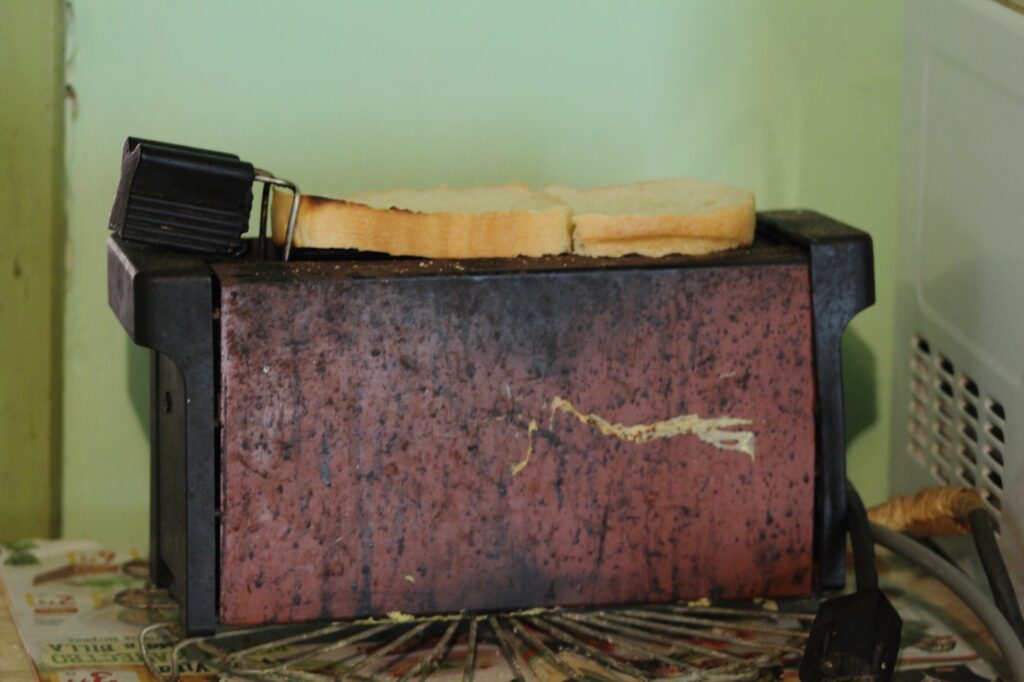
You might wonder if I feel FOMO due to not being active on social media sites, despite my frustration and disgust with them.
LMAO. FOMO for what? In fact, the longer I stay away from these snake pits, the less likely it feels that I will ever return.
Never say never, but I’m also someone who doesn’t watch TV, not even Netflix or any other streaming service. (I do love foreign movies, but I can go to theaters for those.)
So how do I stay plugged in the zeitgeist if I’m not on the platforms?
Well, I try to stay mindful in my daily life. I observe my surroundings and reflect on what I see. Because I’m part of the cultural, social and economic tapestry. If something is happening to me, then it’s likely happening to others as well. If I’m experiencing something in a certain way, others are likely experiencing it that way, too. We’re all interconnected.
When it takes me six to nine months to see a gynecologist here in Toronto, that’s not an aberration. My experience is part of a larger issue: a shortage of doctors amid the deliberate erosion of Canada’s free healthcare. I don’t need social media to interpret reality for me and tell me that the public healthcare system here is ailing because the powers that be are trying to privatize it so they can profit from our illness.
When I hear about more and more people falling sick with cancer and other chronic conditions, especially people in their 20s and 30s, I know that this is the result of environmental and lifestyle factors, rather than genes. I don’t need to be on social media to understand that all the forever chemicals, pesticides and ultra-processed foods we’re subjected to are destroying our bodies.
I don’t need social media to connect for me the dots between environmental degradation and the degradation of human health. It’s obvious that we can’t have human health if the environment is sick because we’re not separate from the environment. The environment doesn’t surround us. There’s no protective barrier between us and it. It is inside of us and we are inside of it. Actually, there is no it. Only us.
I also listen to podcasts. Anything from current affairs and politics to technology, economics, climate change, plant-based nutrition, health and history. Every day, I tune into the BBC, The New York Times, The Guardian and a bunch of indie podcasts while I do my cooking and housework.
And I use another neat technology: physical books. Nonfiction books are my favorite way to learn about the world in a way that is deep, nuanced, meaningful and pleasurable. Fiction is another satisfying way for me to keep up with trends and culture, especially since many of the shows and movies on the streaming platforms are based on novels.
Without physical books, my life would be so bleak and empty. Books are the one technology I can never give up. A portable time-tested technology that has served me reliably since my childhood in Bulgaria, through all my life chapters in different cities and countries.
I find it wild how nowadays the conscious choice not to consume TV, Netflix or social media is considered an oddity, but foregoing books has been normalized. It’s apparently no longer embarrassing even for educated people to admit publicly that the last time they read a book was…gosh, ages ago.
In a recent Vox podcast episode about gender representation in contemporary fiction, the guest—an economics professor—was asked whether he’s an avid fiction reader himself. No, he replied. While he used to read novels as a young man, lately he hasn’t been a reader. He explained that he now consumes “other types of creative output” and is “enjoying the fruits of the digital renaissance,” which is the economist’s way of saying that he just watches Netflix. (I didn’t take seriously anything he said during the interview. How can you discuss modern fiction with any credibility if you aren’t reading it yourself?)
Another time I read an article by a memoirist who confessed that it had been 13 years since she read a novel—thirteen!—and she was finally starting to get back into fiction. I felt disappointed and duped because this was a smart writer whose work I had followed.
Even though we have more books than ever in history, our society is regressing to the time before the mass printing of books began, when only a minority read because of limited access to titles. Amid an abundance of books, we’re choosing illiteracy.
By the way, the beauty of books is that you’ll never waste half an hour looking for something to watch on a platform, only to find nothing good, which is fine because you feel catatonic from all the scrolling, so you might as well go to bed. It’s impossible for me to spend even 10 minutes in a library or bookstore without dying to get several books.
Random Thoughts
Not being active on social media has allowed me to conduct an interesting mental experiment. The experiment of not sharing every half-formed thought I have.
I was never one of those prolific people who post every random thing that crosses their mind. Social media was never the place for me to process my reflections and feelings. That’s what my diary has always been for. Still, I did my fair share of posting half-formed views, many of which were just knee-jerk reactions to the half-formed views of other social media users.
That’s why in the early days of my detox, when I had mild withdrawal symptoms, I’d often itch to broadcast many of my thoughts about immigration, veganism, book publishing and writing as they occurred to me in real time.
Not being able to do that has reinforced for me once again the importance of my journal as the safe space where I can explore my feelings and musings at length, with all their nuances and contradictions. On the pages of my journal, I don’t need to worry about fitting my thoughts into a limited number of characters. I can use my own voice instead of canned conformist lingo such as “not me doing something” and “I don’t know who needs to hear this, but.” In my journal, I don’t have to prove wittiness and coolness. I don’t have to seek approval from strangers. I can validate myself.
Regaining Control
The more important outcome of my social media detox is that I’ve regained my mind. After the initial withdrawal phase, the uncontrollable urge to check the sites every two minutes and to interrupt myself disappeared. My writing sessions are once again fulfilling and productive.
Free from the shallowness and fast speed of the apps, I’m discovering, not for the first time, that the way I like to make a contribution is through slow writing. Writing which takes place over a long stretch of time, during which I have the freedom to read different books on the topic. Writing which allows me to complicate my understanding of things and rethink my views as I revise my draft and allow my subconscious to make connections.
And then share this writing directly with my email subscribers, rather than on social media. Because my labor-intensive essays can never compete for eyeballs with instantly generated AI slop. On X and Facebook, my human words will always lose out to the machine.
Bypassing social media is what creators are increasingly doing. We’re entering a post-social-media era where many writers are going back full circle, reaching their audiences directly through email and the modern version of blogging, Substack.
I’m excited about this shift. As a reader, I love receiving thoughtful articles in my inbox instead of having to dig through social media trash for the occasional gem.
The writer in me is also excited, but I don’t trust Substack. After all, it too, is the domain of the tech bros. Wherever you go, there they are, the bros, acting as gatekeepers, middlemen and owners of critical digital infrastructure.
Substack is a text-based offering which caters to those of us who still love the written word. But who is to say that it won’t start favoring video for its business purposes, the way X, Instagram and Facebook have done, forcing creators to start pumping out reels?
Who is to say that Substack will remain free for writers to use? Or that it won’t decide to take a bigger cut from the reader subscriptions they receive?
Or that it won’t shut down out of the blue, and then you can kiss your archive of articles and list of subscriber emails goodbye, after which you have to start from scratch on another platform?
I have similar concerns about the alternatives to Substack, such as Medium and Ghost.
That’s why I prefer to publish on my own website, Foreignish, instead of building my house on someone else’s land, although not everyone has or wants that option. I have full control over my website, so long as I pay my hosting fees, that is. Like I said, there’s no escape from the tech overlords.
But Substack skepticism aside, I hope the return to blogging and email will bring a mass exodus from social media, which can run these toxic platforms to the ground once and for all.
Maybe this will encourage the publishing establishment to evaluate books on their merits alone and to take a chance on authors they wouldn’t have considered otherwise, instead of using platform as an easy proxy for book profitability. After all, before social media, acquisitions editors relied on other criteria when deciding whether to invest in authors and their books.
New Vision
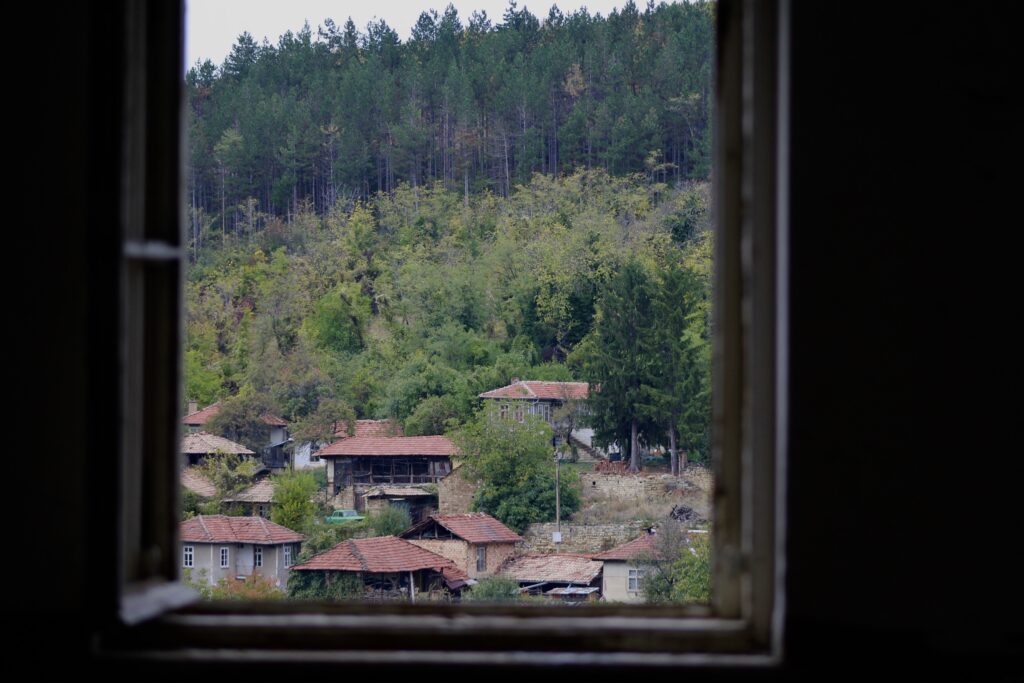
The demise of ad-funded social media can allow us to create a brand-new version of it—one which serves users instead of mining their attention for profit.
Varoufakis and others have put forth proposals about a subscription-based approach where you pay a nominal fee to use a social media site. The idea is that when these platforms’ business models depend on subscriptions, they would be inherently inclined to prioritize the interests of users. They would act like public utilities. Predatory advertisers would be out of the picture.
I’d be the first to sign up for this kind of service. I’d be more than happy to pay a small amount in exchange for being able to follow conversations and express myself without having to compete with AI garbage to reach my people.
Varoufakis envisions subscription-based social media in the context of a new, truly democratic, environmentally sustainable world order. Under this paradigm, the general public, rather than corporations and tech oligarchs, would determine how workplaces, governments and economies operate. Companies wouldn’t be allowed to engage in the kinds of activities that harm the planet and exploit workers. Today’s corporate concentration of power wouldn’t exist because corporations wouldn’t have the ability to dictate legislation that only serves their interests. There would be universal basic income and extensive high-quality public services, such as healthcare, mass transit and education.
This order is possible. The current order is the impossible one, the absurd one—even though corporate interests have conditioned us to see it as the only way to be.
For many in the West, especially in the U.S., the status quo feels natural and inevitable because it’s all they know. They can’t seem to imagine a different paradigm.
But I grew up in a communist dictatorship. Then I witnessed its collapse, along with the collapse of the communist regimes in the surrounding countries. So I know first hand that economic systems are artificial creations. They’re ideological choices. We can change them. ♦
NOW READ:
Breaking Up With New York, Once and For All
Is Making Friends as an Introverted Foreigner Harder Than Dating?